(Trip) On-sky demonstration at Mcdonald telescope
Atmospheric turbulence is one of the biggest challenges in ground-based optical imaging. It rapidly distorts incoming wavefronts and degrades image resolution, making it difficult to recover diffraction-limited scenes.
To evaluate our computational imaging approach for mitigating atmospheric turbulence under real on-sky conditions, we visited the McDonald Observatory (Nov. 27–Dec. 4, 2025). This trip provided an opportunity to move beyond simulations and laboratory experiments and test our reconstruction algorithms under actual observing conditions.
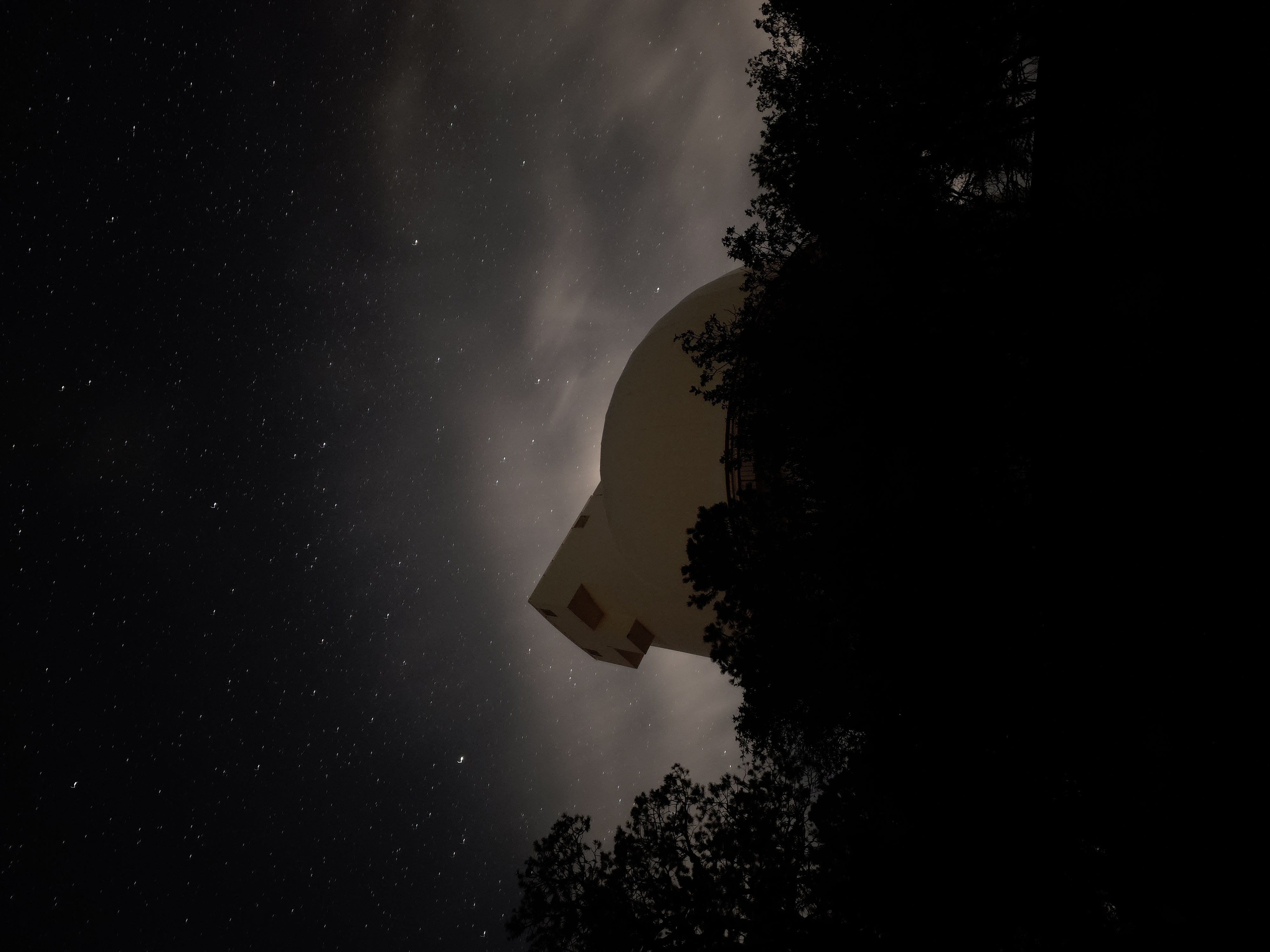
McDonald Observatory night sky
During the observations, we imaged binary star systems along with several other astronomical targets. Watching these objects emerge from noisy, turbulence-distorted measurements using our own methods was both exciting and deeply rewarding.
What struck me most was just how fast and strong the atmospheric turbulence can be in practice. Its impact was more severe and far more dynamic than I had anticipated. Experiencing this firsthand provided intuition that simulations alone simply cannot capture.
Overall, this visit was a valuable step toward bridging theory, computation, and real on-sky imaging. The insights gained during this trip will directly inform future algorithm development and system modeling.
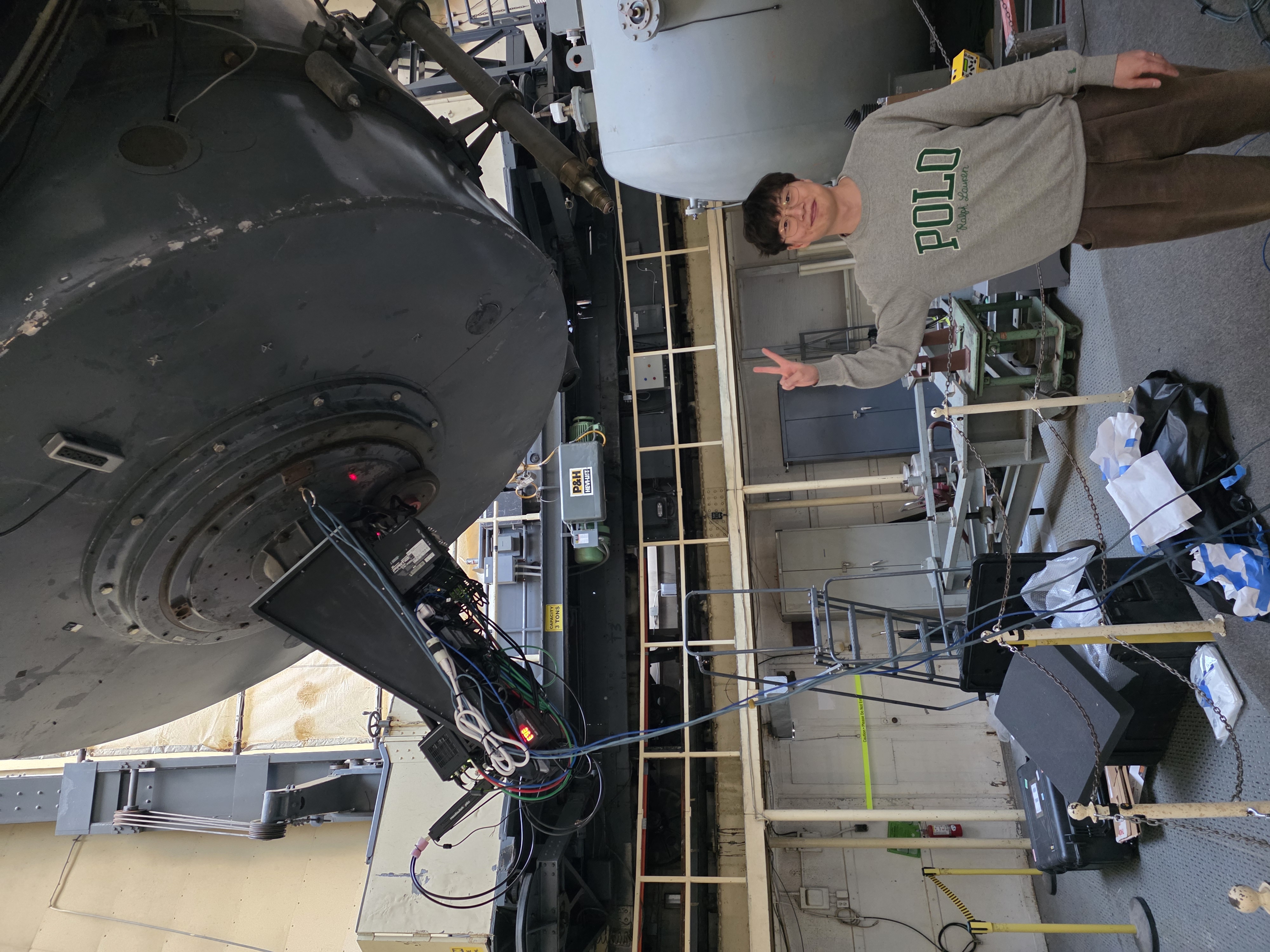
Our on-sky imaging setup